Physics by Cutnell and Johnson, 5th Edition (2001). Published by John Wiley & Sons, New York. Students will not be assigned a textbook unless he or she asks for it. Instead of using a printed book, the textbook resources are on my website, www.mrwaynesclass.com. Learning resources can be found at www.mrwaynesclass.com/textbook
Description of physics
Physics seeks to describe and predict natural events by seeking the
relationships between motion, force, energy and time. Physics is at
the root of all types of engineering -mechanical, electrical, nuclear,
chemical, etcetera. This course will discuss the basics in fields of
physics such as kinematics, dynamics, electricity, optics, nuclear physics,
etcetera. The number one priority is to learn how to think critically,
in a scientific manner, about the physical environment. This course
will follow the "Virginia Standards of Learning" for physics. There
will be many labs to explore the concepts of physics. At the beginning
of each chapter a sheet of objectives, homework problems, and labs will
be handed out. Every chapter will be followed by a test. The test will
be derived from the objectives.
Topics Covered
(Some topics may be covered
out of this order)
Computer Usage
Momentum and Impulse
Dimensional Analysis
Kinetic and Potential Energy Relationships
Vector Algebra
Work and Power
Kinematics (by graphical means model)
Electrostatics
Kinematics (by the numbers model)
Current Electricity
Newton's 3 Laws of Motion
Magnetism
Simple Harmonic Motion
Light
Projectile Motion
Special Relativity
Circular Motion
Modern Physics
Newton's Universal Gravity & Kepler's Laws of Planetary Motion
Final Project ?
All these topics cover the Virginia Standards of Learning, SOL’s. A complete list of science SOL’s can be found at the Virginia Department of Education's website [Click here for a direct link to the pdf file.] They are at the bottom of the page listed as PH.1, PH.2, and etcetera.
Supplies
It is suggested that students
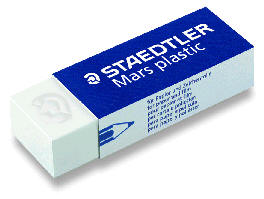
also purchase a "drafting" eraser like the "Hi-Polymer" by Pentel, or the Mars, plastic by Staedtler.
The white rectangular shape makes this type of eraser easy to
recognize. Drafting erasers work by lifting the graphite off
the page and resist smudging the work. Rubber erasers work by sanding off the pencil marks and the paper under them. Now, many pencils come with this type of eraser on the end. It is usually white or some fluorescent color. ($1.25)
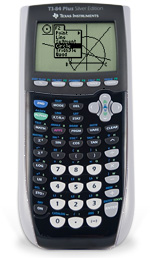
TI-84
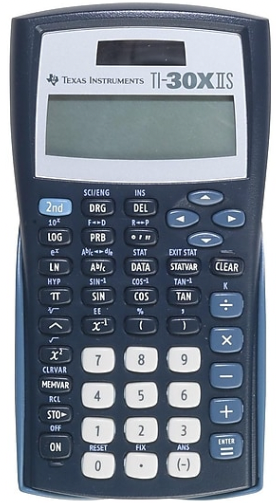
TI-30XIIS
Students are expected
to have a calculator with trigonometric functions. It does not have to be a graphing calculator. None-graphing calculators range from $10 - $20. The Texas Instrument's TI-30XIIS is a typical choice. But if a student
is thinking about buying a graphing calculator, buy a TI-84 plus. ($100 -on sale or cheaper on eBay.) I have some non-graphing calculators that can be loaned out the beginning of the year for the whole year. "DESMOS" is NOT allowed in class. On class assessments computers and phones are not allowed to be out. This limits use of the online calculators such as Desmos. It is important that students learn what the buttons do on the calculator and where the functions are located. We do so much more than just +, –, x, ÷. Familiarity with the calculator reduces stress when doing assignments. This is only accomplished when each students uses the same calculator on every assignment. This is why each students needs their calculator. I have an electric engraver that you can use to etch your name in the back of your calculator. Ask to use it before or after class.
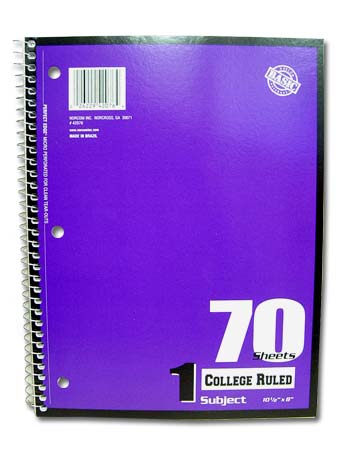
Spiral or loose leaf notebook or a folder with paper in it. The work needs to be quick and easy to access. This will help with class work and test reviews.
Something to keep handouts like a 3 ring binder or a folder.
Communication
You can expect to hear from me with the first 3 weeks of school via email. If you have a question or comment please email or call me at school. I check my phone messages every business day. You can expect a return call during the next business day -if I'm not absent the day your message is left.) I will respond to your email within 2 business days of receiving it. Even if I can't expound in my response, I will acknowledge your email. If you do not receive a response email, call me. No response usually means that your message has been quarantined by the county's spam filter. (It is very aggressive.) If your student has a question about an assignment or grade, please encourage him or her to talk with me. I'll listen.
Email, Text Messages, and PowerSchool
"Homework" is not counted for a grade. This does not mean it is not important. I will see and provide verbal feedback on every students' homework assignment nearly every single day. If the student does not have their homework I will send you a generic text message telling you of this. In PowerSchool I will make a comment quiting what the students said to me. Sometimes the complexities of life intervene and a students does not get the homework and they tell me about it. On these occasions you will not get a text message and I will excuse the assignment in PowerSchool's gradebook.
Technology/Laptops
We will use the student's laptop nearly everyday. It must charged and brought to class.
Every student needs bring and use his or her own calculator.
Extra Credit
Extra credit will NEVER be offered.
Evaluation
Grades will be based on performance on tests, quizzes, activities and labs. Each assessment will be worth a certain amount of points. Typically:
Tests are worth 75 to 150 points
Activities/Lab are worth 10 to 80 points
Homework Assignments (Missing assignments are marked in the gradebook but there is no grade associated with it.)
Nine weeks' scores will be based on the percentage of possible points earned. The gradebook will be filled with a lot of information but note a large number f grades. This s because only summative grades, (like unit tests,) count towards the final grade. Many assignments are for learning and mistakes. They are completed and graded but the grades are meant as a feedback for personal growth and they are not recorded in the grade book. I good about getting everything graded and in the grade book by the next class in 9 out 10 assessments. (Make-up or mastery work takes longer the grade.)
Class Preparation Grades – – No "Homework" Grades
Homework grades are gone. They have been replaced with "class preparation" grades. A class preparation grade indicates a student’s readiness to learn. This is demonstrated by having the homework or any other out-of-class assignments completed upon entering the classroom. Homework credit is given for attempting the assignment. What and “attempt” looks like is described to the students in every unit. Out-of-class assignments are assigned as a way of reviewing the day’s concepts or skills while getting mentally ready for the days class. The preparation grades cannot be turned in late or “made up.” This is because we go over the assignments in class and post answers on line to most problems. If it was turned in late then that would show that student was not prepared for class. If a student missed a class due to illness, doctor’s appointment or family business, then he or she is not responsible for the grade or the homework assigned when he or she was absent. But if he or she returns with the completed homework that was assigned in his or her absence, then I will give them credit if they take the initiative to show it to me at the beginning of class.
Mastery Learning
After taking a test, a student may take another test on the same topic. I will record the higher of the two grades. But, the right to take the mastery test has to be earned. This is demonstrated two ways.
By completing an additional assignment from the unit. Depending on the unit’s difficulty, students are usually given a weekend to work on the assignment. Student’s who do not understand how to do the problems need to see me or someone else for help. I am available before school and during most "Patriot Periods."
This mastery assignment is checked for effort and completion and not absolute correctness. What “effort” looks like is discussed during every unit. Some notes, homework solutions, short videos highlighting the notes and/or problem solutions, and pretests are provided as on line resources. Students are to complete the mastery assignment on time. (This may mean seeing me during 8th period or before school starts for help.) The only way a due date extension is given, is if a parent or guardian writes a note explaining that the student was sick or was not able to work for other reasons. Late work, without a parent or guardian’s note, forfeits the right to take a mastery test.
The 4 minute YouTube video below is my description of how I do mastery learning.
The class will follow the school's grading scale. All nine weeks' grades reported on the report card will be rounded to the nearest one's place; e.g. 89.532 becomes a 90 on the report card. However, the raw score will be used for semester averages. Semester averages will be rounded to the nearest one's place -like the nine weeks grades.
"Class Prep" assignments will appear in the PowerSchool's gradebook book as collected, missing or excused. If a "class prep" assignment is missing I will leave a comment quoting the students as to why it is missing. (These comments can be enlightening.)
Formative assignments, such as some activities, quizzes and other shorter assignments will not appear in the grade book. They are meant for learning. As such the are evaluated and discussed in class but a grade is not recorded. The nine weeks grade is determined by summative grades. A summative grades is a given after much feedback from class prep assignments and any non-recorded quizzes. These are usually thought of as unit tests and an occasional, more detailed, labs.
A 50% grade is assigned for any missing work until it is made up. A student will not be awarded a grade lower than a 50%.
The following unit tests have a mastery test.
Dimensional Analysis
Momentum and Impulse
Kinematics (by graphical means model)
Kinetic and Potential Energy Relationships
Kinematics (by the numbers model)
Work and Power
Newton's 3 Laws of Motion
Electrostatics
Simple Harmonic Motion
Current Electricity
Projectile Motion
Magnetism
Circular Motion
Light
Newton's Universal Gravity & Kepler's Laws of Planetary Motion
Special Relativity
Modern Physics
Pre-Test Grades
Before each test, students are turn a summary page. I have template for students to use. This template can be picked up in any time in class, (blank ones sit next to the stapler and pencil sharpener, downloaded from a link in Schoology, or the 3 sections can be included on a piece of notebook paper. This summary page is a separate 5-point grade. Students who do not have the sheet ready before the test, cannot turn it in late. He or she will receive a "3" for the summary. The purpose of the summary sheet to act as a review BEFORE taking the test. That is why they are not accepted late.
Grade Progress
I will contact the parents or guardians via email, text message, or phone if a student receives a failing grade on a test or major lab.
Exam Exemptions
There are no December exam exemptions, if we have a December exam. There are no final exams in June. There is a final project that is started in May and is due in June.
Homework - - "Class Prep"
I do not give homework." I give "Class Prep" assignments. These assignments are meant to get ready for the next day of class. At the very beginning of class I will look at and provide individual verbal feedback to EVERY student on EVERY class-prep assignment. This will help me to gauge students' and the classes' understanding to see what adjustments I need to make in the beginning of class. Students will immediately work in randomized small groups to further check and understand the class prep. I will follow up to address additional questions and highlight some of the solutions students tend to have challenges with.
"Class Prep" assignments will appear in the PowerSchool's gradebook book as collected, missing, or excused. If a "class prep" assignment is missing I will leave a comment quoting the student as to why it is missing. (These comments can be enlightening.) When you the parent of guardian look at a students grade to see if they are understanding, Do not rely on the grade alone. You need to drill down into the grades to see is they are currently doing the work and if not, what they are saying about it in the missing work comments.
INCLEMENT WEATHER ( SNOW AND FLOOD DAYS "OFF" )
During days when school is postponed due to inclement weather, students are expected to check Schoology for a physics assignment. Assignments will be posted by mid morning in most circumstances. Reminders to check the blog will be sent to student emails, and by text on from me using Remind.com. Students without power or Internet are not held responsible for the grade on the assignment but they are responsible for the material covered on any following assessments.
Wireless Device Policy
A ”wireless device” is anything that is capable of accessing the Internet. Such as, but not limited to, a netbook, laptop, iPad, iPod, iTouch, etcetera.
Only use wireless devices in class with the teacher’s specific permission.
When asked to close your netbooks/laptops, close them and put other wireless devices away. You do not need to shut them down -only put them to sleep.
When allowed, wireless devices may only be used for work directly related to this class.
Wireless devices are to remain closed or put away during all tests and quizzes unless otherwise permitted by the teacher.
If the teacher walks around and you close your netbook or laptop when he/she walks by, it will be considered a sign that you are not using it for allowed purposes.
Anyone not agreeing to follow this policy must either not use a wireless device in class or accept that the wireless device will be recognized as a distraction and dealt with according to school policy. This may include being prohibited from using device in the classroom for the rest of the semester or year.
Making Up Missed Work.
When a test has been missed, arrangements must be made within 2 days of returning to school to make up the missed work. The missed assignment must be made up within 2 weeks of returning to school. Failure to make up work will result in a 50% for the assignment. An "incomplete" letter grade will be given for the 9 weeks to any student with an assignment not turned in by the end of a grading period. The student then has 2 weeks from the end of the grading period to turn in the assignment.
If a student misses an assignment due to an illness, then he or she will not be penalized if they return without completion of the assignment. The assignment will still need to be made up according to school policy. Missed class prep assignments due to absences may, optionally, be turned in upon returning for credit. But students are not held responsible for "class prep" assigned while absent due to illness.
If a student misses a unit test or other summative assignment, then make arrangements with the teacher upon returning. Students have a two week window from the day the original assignment was retruned to make up the summative assignment. Special extended time considerations will be given for unusual illnesses that are drawn out like mononucleosis, COVID, concussions, etc. Expect an email from me after your student and I have had a discussion.
Website
This class will have a web site, http://www.mrwaynesclass.com. Working on the web is expected. The web site will be a constant work in progress. The web site contains:
Our "Textbook" -It is more interactive than a printed textbook.
Documents distributed in class in either web form or as a PDF document.
Interactive, on-line, pretests developed by the teacher.
Related topic links.
Animations and some lecture notes from class.
Tutorial links to other sites. (This web site will only contain links to legitimate, safe web sites. Once a student leaves the www.mrwaynesclass.com server, I cannot be responsible for the paths they "surf" beyond the initial link.)
Many video tutorials on how to do more difficult problem types.
Attendance (This is the division's policy for all classes.)
The last 2 years have been very difficult regarding student attendance during the pandemic. We recognize the strong correlation between student attendance in class and strong academic performance. All ACPS high schools will provide the following guidelines as it pertains to attendance this school year.
Parents/guardians of students who are absent must inform the school of the reason for the absence (school attendance office) no later than upon the student’s return to school. If no reason is provided within five (5) days, the absence will be unexcused.
Students with excessive absences, excused or unexcused, are subject to loss of credit. At 10 absences for ONE PARTICULAR CLASS during the year, excused or unexcused for a class period, the principal has the right to deny credit for that course regardless of the student’s grade in that particular class. In order to recover this time and earn the credit, they will be required to attend an after-school or Saturday school program in place of excused absences. Medical conditions and hardships will be handled on a case by case basis.
Due Dates (This is the division's policy for all classes.)
Students can turn in graded work up to two weeks after the due date. After two weeks, the assignment is recorded as MISSING with a 50% in the gradebook. There is an appeals process for the student for work submitted after the two week deadline.
A student can be required to complete Essential Assessments in order to receive credit for the class. Essential Assessments will be noted in the course syllabus and gradebook.
A little more explanation...
Suppose an assessment is administered on Monday you miss the test. The assessment is returned in Wednesday. The two week deadline starts on first the day the assessment is returned. Eventhough you did not take the test on the original date it was given, your deadline is also set by the original test. This 2 week deadline is to make up the oringal test and complete teh mastery test if you choose to do so.
Grading/Assessments (This is the division's policy for all classes.)
Students have a reassessment option on significant summative assessments.
Between the original assessment and retake, a teacher may require certain types of work from the student.
With a retake, the HIGHER score is recorded for the student’s grade.
Students have two weeks from when they received feedback on an assessment to complete a retake or revision. Teachers may extend this timeframe as they see fit.
A little more explanation...
Not every assignment has the retake, or what I call the mastery option. Only the unit tests, (see above).
Cell Phone Policy (This is the division's policy for all classes.)
Cell phone use is prohibited during instructional periods; cell phones must remain silenced and out of sight. School-provided technology will be used to support learning and accessibility needs.
All other communication devices (e.g., smart watches) shall be off or away during instruction.
Students may use cell phones before the start of the school day, between classes, during lunch, and after school.
Students may not use cell phones in the restrooms or in the locker rooms of the school. Students may use cell phones for instruction when deemed necessary by a 504 plan or IEP team, for medical purposes, and for translation.
In the event of an emergency or other unforeseen circumstance, students should notify their teacher of the need to use their phone. With the approval of the teacher, the student will be permitted to go to use their cell phone. Office staff will provide a confidential space for students to use the phone as needed.
by Tony Wayne ...(If you are a teacher, please feel free to use these resources in your teaching.)
The owner of this website does not collect cookies when the site is visited. However, this site uses and or embeds Adobe, Apple, GoDaddy, Google, and YouTube products. These companies collect cookies when their producs are used on my pages. Click here to go to them to find out more about how they use their cookies. If you do not agree with any of their policies then leave this site now.